As a leading plastics recycler and producer of green composite.

Leave Your Message
Choosing WPC Wall Panels is more than selecting a color or copying a showroom trend. The right decision affects moisture resistance, surface stability, installation time, and long-term maintenance. A panel may look convincing under bright retail lighting, yet reveal warping near a humid bathroom window. Small details matter.
Materials-selection expert Michael F. Ashby offers a useful principle: “The best material is the one that meets the design requirements.” This idea applies directly to WPC Wall Panels. Buyers should examine the panel’s wood-plastic ratio, core density, surface coating, edge finish, fire classification, and installation system. Request technical data, not only attractive samples. Check whether the stated performance comes from independent testing or simple supplier claims. Reliability is built through evidence.
These ten tips are designed for real project conditions. They consider wall moisture, daily impact, cleaning habits, ventilation, and budget limits. A hallway may need stronger scratch resistance than a quiet bedroom. A coastal property may require greater attention to humidity and corrosion around fasteners. A cheap panel can become expensive after repeated repairs.
There is no perfect product. I have seen attractive panels fail because installers ignored expansion gaps. That mistake is easy to repeat. Think carefully about the weakest point: the panel, the adhesive, the framing, or the workmanship. The best choice balances appearance, performance, verified quality, and practical installation. That balance deserves a closer look.
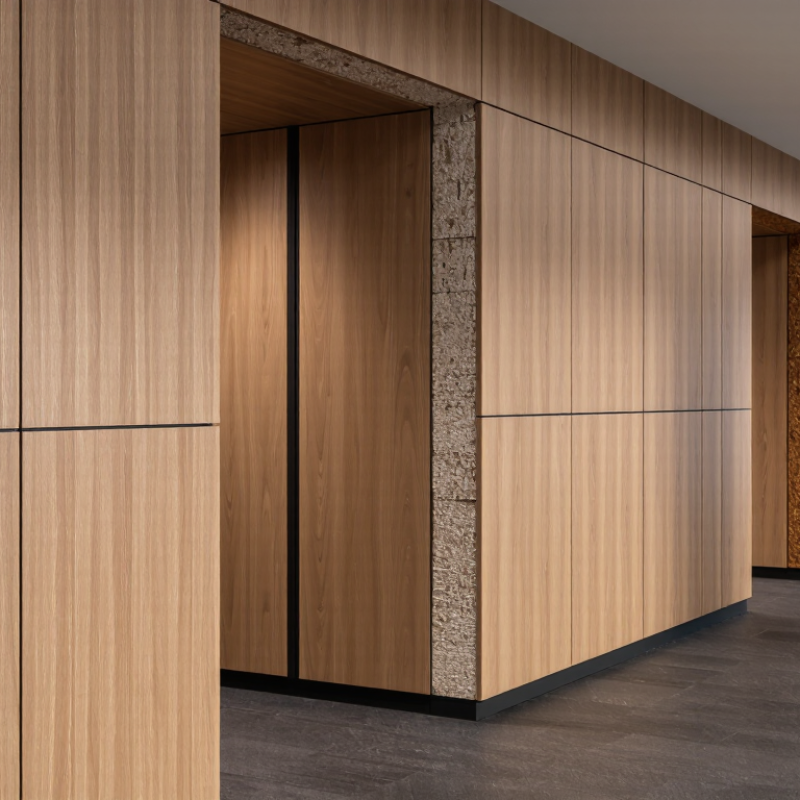
10 Tips to Choose the Best WPC Wall Panels?
Understand WPC Wall Panel Materials and Core Construction
WPC wall panels combine wood fibers or flour with thermoplastic polymers and stabilizing additives. The exact ratio affects stiffness, texture, moisture resistance, and weight. Ask for a clear material specification, not only attractive surface photographs. A reliable supplier should provide composition details and independent test reports. Look closely at the edges. Uneven fibers or small voids may indicate poor mixing.
Core construction matters as much as the decorative finish. Solid panels feel heavier and resist impact well, while hollow profiles reduce weight and improve installation speed. However, thin internal ribs can flex under pressure. Tap the panel and inspect its cross-section before ordering. Co-extruded panels may include a protective outer layer against stains, humidity, and scratches. That layer still needs proper sealing at joints and corners.
Expansion gaps are essential. WPC can move when temperatures change, especially near sunny windows. Follow the stated installation spacing and use suitable fasteners. I once underestimated afternoon heat on a west-facing wall; the joints became visibly tighter. That mistake changed my checking process. I now compare laboratory data with real samples, including odor, surface hardness, color consistency, and screw holding strength. Also verify fire-performance ratings for the intended building location. A beautiful panel is not automatically a safe panel.
| No. | Selection Tip | Material or Construction Check | Typical Data or Benchmark | Why It Matters | Buyer Action |
|---|---|---|---|---|---|
| 1 | Verify the WPC formulation | Check the proportion of thermoplastic resin, wood flour or fiber, mineral fillers, pigments, and additives. | WPC formulations vary widely; wood content is commonly specified as a percentage by mass, often within approximately 30%–70% for many products. | Resin content affects water resistance and bonding, while wood content influences texture, stiffness, and moisture response. | Request a technical datasheet and declared composition range. |
| 2 | Choose a suitable core structure | Compare solid-core, hollow-core, and foamed-core panels. Examine rib layout, wall thickness, and internal voids. | Hollow panels reduce weight; solid panels generally provide higher impact resistance. Core geometry is product-specific and should be shown in a section drawing. | The core determines rigidity, screw-holding ability, weight, sound behavior, and installation requirements. | Ask for a cross-sectional drawing and panel weight per square meter. |
| 3 | Check density and weight consistency | Review density, mass per unit area, and production tolerances across different batches. | Many commercial WPC profiles fall roughly within 0.60–1.40 g/cm³, but the correct value depends on the resin, filler, and core design. | Large variations can indicate inconsistent compounding, moisture, or incomplete control of the internal structure. | Compare sample weight with the declared tolerance, not only the nominal value. |
| 4 | Evaluate moisture resistance | Inspect edge sealing, surface cap, tongue-and-groove joints, and the material’s water-absorption test data. | WPC is moisture-resistant rather than automatically waterproof. Water absorption varies significantly by formulation and core design. | Unsealed cut edges and hollow chambers can allow water ingress, swelling, staining, or freeze-thaw damage. | Request water-absorption results and installation details for wet areas. |
| 5 | Confirm dimensional stability | Check thermal expansion, moisture-related movement, flatness, and recommended expansion gaps. | WPC expands and contracts with temperature and moisture. The coefficient of thermal expansion is formulation-dependent and should be stated by the manufacturer. | Insufficient movement allowance may cause buckling, open joints, warping, or fastener stress. | Use the documented expansion gap for the project’s temperature range. |
| 6 | Review fire-performance data | Look for tested reaction-to-fire classification, flame-spread data, smoke production, and end-use limitations. | Fire performance is not determined by the term “WPC.” Results depend on resin, additives, thickness, surface treatment, and mounting method. | Interior and commercial projects may have mandatory fire requirements that vary by building code and location. | Request a third-party fire test report for the exact panel configuration. |
| 7 | Inspect the surface layer | Determine whether the finish is co-extruded, laminated, painted, or digitally printed, and check UV stabilizers. | Surface durability depends on coating thickness, pigment stability, UV additives, and exposure conditions; no single finish suits every application. | The surface layer affects color fading, scratch resistance, stain resistance, and cleaning performance. | Compare accelerated weathering or color-retention test results when used near windows or outdoors. |
| 8 | Check mechanical performance | Review flexural strength, impact resistance, screw withdrawal, and panel-span requirements. | Mechanical values vary with thickness, temperature, density, and core geometry; results should be reported using a recognized test method. | Higher stiffness and impact resistance are important in corridors, public spaces, and high-traffic rooms. | Match test results to the intended span, fixing system, and expected loads. |
| 9 | Assess installation compatibility | Check panel dimensions, joint profile, fasteners, clips, substructure spacing, cutting method, and ventilation requirements. | Common wall-panel thicknesses are often about 5–25 mm, while length and width vary by profile and application. | A panel can perform poorly if the support spacing, fasteners, or joint system is unsuitable. | Obtain a complete installation guide, accessory list, and cutting allowance. |
| 10 | Verify safety and sustainability claims | Review volatile organic compound emissions, recycled content, formaldehyde information, recyclability, and disposal guidance. | Environmental performance depends on the complete product, including resin, additives, pigments, surface layers, and packaging. | Documented declarations are more reliable than unsupported terms such as “eco-friendly” or “non-toxic.” | Ask for current laboratory reports, safety data, and environmental documentation. |